
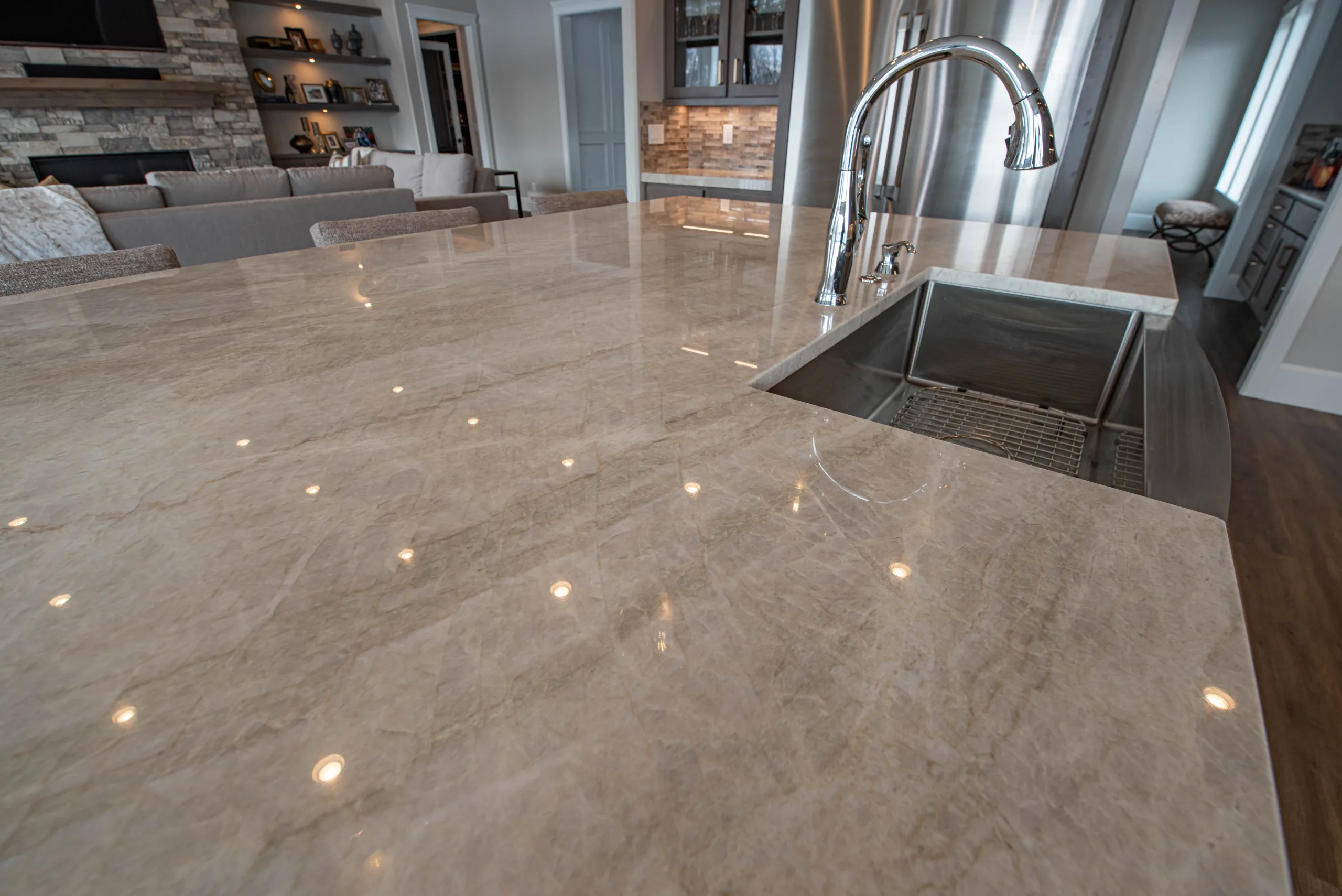
When remodeling your kitchen, bathroom, or laundry room, you may find yourself deciding between quartz and quartzite for the countertops. While the names sound familiar, these two materials have distinct benefits and vary in composition, maintenance, durability, and cost.
Here’s a clear breakdown of quartz and quartzite to help you decide which is best for your home.
What Is Quartz?
Quartz countertops are engineered stone surfaces made from crushed natural quartz crystals mixed with resins and pigments (about 90% natural quartz). The result is a durable, non-porous slab that’s designed for consistency and performance.
Key benefits of quartz:
- Non-porous (no sealing required)
- Highly stain-resistant
- Low maintenance
- Highly durable and flexible (less likely to crack, chip, or scratch)
- Consistent colors and patterns
- Wide range of modern styles
Because it’s manufactured, professionals can control the look, creating everything from solid colors to designs that mimic marble or granite. Colors include white, cream, gray, black, beige, and taupe. Quartz is perfect for homeowners who want a sleek, contemporary look with minimal variation.
Quartz also works well in busy households because it won’t absorb liquids, harbor bacteria, or grow mold and mildew, and requires minimal maintenance. You only need to use mild soap, warm water, and a soft cloth to clean.
Things to consider:
- Not as heat-resistant as natural stone, it can melt or discolor if exposed to high temperatures
- Can yellow and fade with prolonged UV exposure (not ideal for outdoor kitchens)
- For some homeowners, it may not be as natural-looking as real stone
What Is Quartzite?
Quartzite is a natural stone formed when sandstone is exposed to intense heat and pressure beneath the Earth’s surface. This results in a dense, durable stone that often resembles marble but performs more like granite.
It’s quarried in slabs, similar to granite or marble. It is typically white or gray, but it can have hints of pink, red, yellow, or green.
Key Benefits of Quartzite:
- Extremely hard and durable (a 7 on the Mohs hardness scale)
- Excellent heat resistance (can tolerate hot pans without damage)
- Natural, one-of-a-kind patterns
- Often resembles marble but is harder
Quartzite is ideal for homeowners who love the organic beauty of natural stone and want something unique, as it features dramatic, marble-like veining.
Things to consider:
- Porous (requires periodic sealing)
- Can stain if not properly maintained or sealed
- Typically higher price point, depending on rarity
- Natural variation means no two slabs are identical
Because quartzite is a natural stone, you should avoid using cleaners that have acidic ingredients, such as vinegar or lemon, and instead opt for something that is pH-neutral.
Appearance Differences
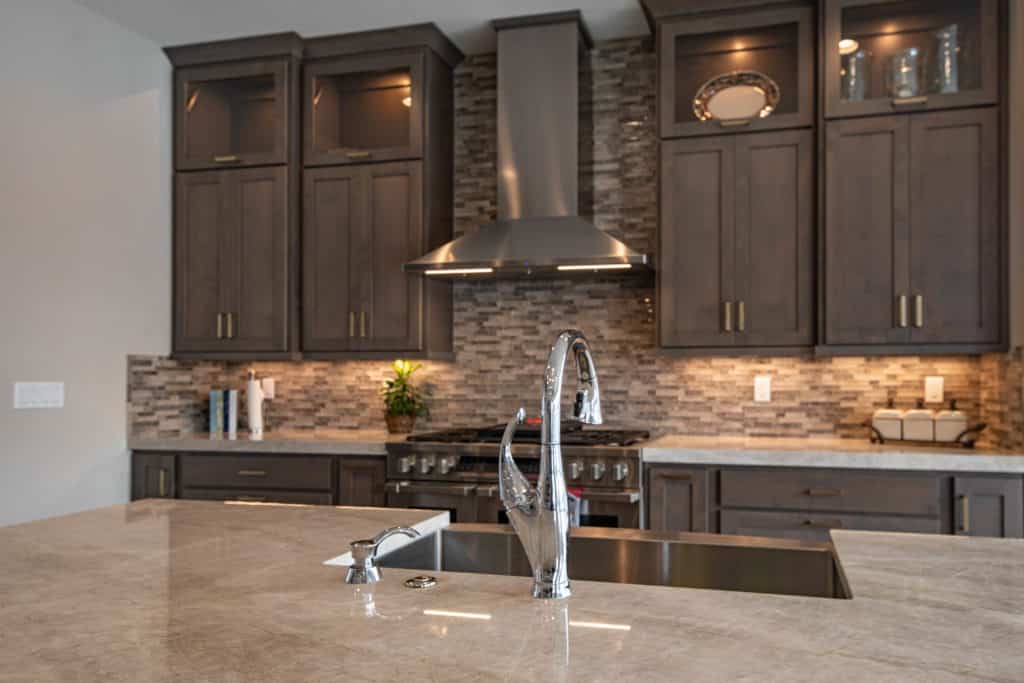
Quartz — Quartz is more uniform and customizable. It is also available in bold colors and modern finishes.
Quartzite — Quartzite has natural movement and veining. It often resembles marble but with more durability.
If you want a consistent, contemporary aesthetic, consider quartz. If you prefer natural character and depth, choose quartzite.
Cost Comparison
Both quartz and quartzite are considered premium countertop materials. Pricing can vary based on brand, slab availability, thickness, edge profile, and the complexity of installation. In many markets, they fall into a similar price range, though rare quartzite slabs can exceed quartz in cost.
Sustainability & Environmental Factors
Quartz — Quartz often contains recycled content and is manufactured using industrial processes. Energy and resin usage vary by brand.
Quartzite — Quartzite is a natural stone extracted from quarries, however its transportation footprint can be significant if slabs travel long distances. Most sealing products are chemical-based.
Both quartz and quartzite are durable and long-lasting, allowing you to avoid premature or frequent replacements.
Which is right for Your Home?
Choose quartz if:
- You want low maintenance
- You prefer consistent patterns
- You want a wide selection of colors
- You don’t want to worry about sealing
- You live in a busy household
- You want a modern or contemporary look
Choose quartzite if:
- You love natural stone
- You want superior heat resistance
- You appreciate unique veining
- You’re okay with periodic maintenance
- You want the elegance of marble with greater durability
The Bottom Line
Both quartz and quartzite are excellent countertop materials. The right choice for your home depends on your lifestyle, design preferences, and maintenance expectations.
If you cook frequently and want countertops you don’t have to worry about, you should go with quartz. If you value beauty and don’t mind occasional upkeep, quartzite can deliver stunning, long-lasting results.
If you’re unsure which to go with, visit a showroom to see and feel the slabs in person, as this can help you make your final decision.
Follow Us