
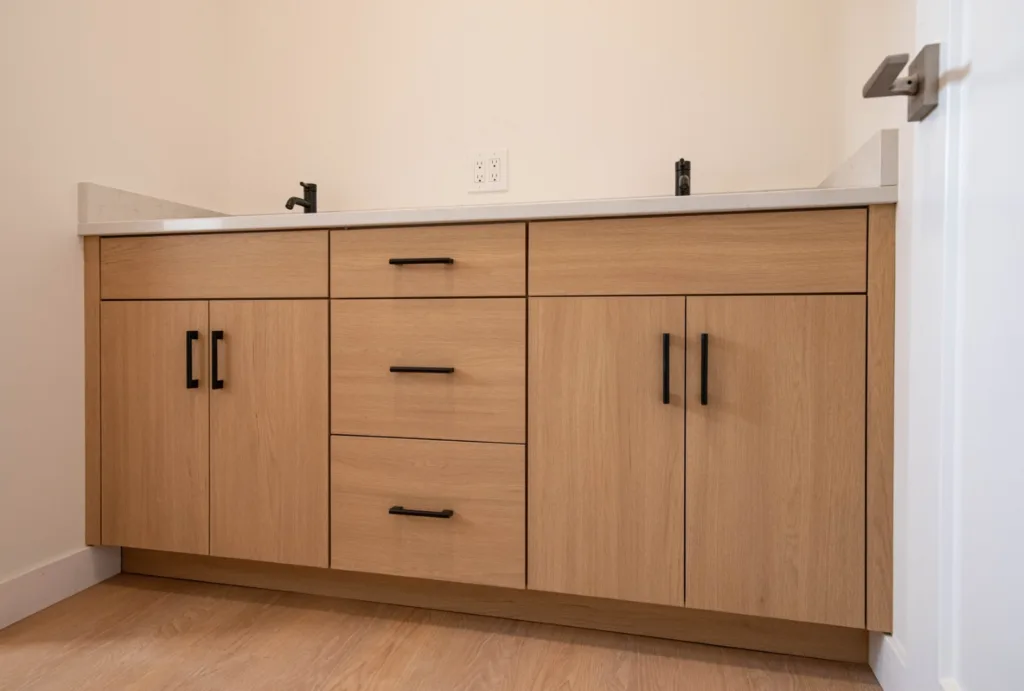
A cabinet and countertop remodel can completely transform your kitchen, bathroom, or laundry room. However, even if you’ve planned carefully, you may encounter a few surprises during the process. Understanding what can go wrong (and why) helps homeowners set realistic expectations and avoid unnecessary stress.
Below are some of the common surprises homeowners encounter during a cabinet and countertop remodel, along with tips on how professionals help manage them.
1. Hidden Damage Behind Existing Cabinets
After removing old cabinets, contractors may uncover:
- Water damage from past leaks
- Mold or mildew
- Uneven or deteriorating drywall
- Damaged subfloors
These issues are often hidden for years behind cabinetry and only become visible during demolition. You may need to make repairs before new cabinets or countertops can be installed. While adding extra time and cost, addressing these issues early ensures a safe and long-lasting installation.
2. Unlevel Walls and Floors
Many homeowners assume they have perfectly straight walls and floors. But that’s rarely the case, especially in older homes. Common challenges include:
- Gaps between cabinets and walls
- Uneven countertop seams
- Extra adjustments needed for proper alignment
Skilled installers use shims, fillers, scribe molding, and precise measurements to ensure everything looks seamless despite imperfect surfaces.
3. Plumbing or Electrical Adjustments
New cabinet layouts or deeper countertops may interfere with:
- Existing plumbing lines
- Electrical outlets
- Appliance clearances
For example, a farmhouse sink may require plumbing changes, or a new cabinet configuration might block an outlet.
Minor plumbing or electrical updates are common and should be planned into the remodel timeline. Additionally, some remodels require permits, especially when altering gas lines or moving plumbing or electrical.
4. Measurement Mistakes
Many homes aren’t designed for today’s larger appliances or modern cabinet depths. When planning a countertop or cabinet remodel, you may make the following mistakes:
- Not considering the work triangle (space between the sink, stove, and fridge)
- Ignoring cramped spaces, colliding doors, and inaccessible corners that need accommodating
- Not measuring the space needed for appliances
- Not considering where HVAC vents or returns are located
Measuring correctly, getting appliance specs before design, and accounting for doors and other awkward areas will make the project run more smoothly and help you avoid unnecessary delays.

5. Longer Lead Times Than Expected
Cabinets and countertops, especially custom or semi-custom options, often require manufacturing and fabrication time. Potential delays include:
- Material backorders
- Custom finishes taking longer to produce
- Countertop templating and fabrication schedules
Ordering early and working with experienced professionals helps minimize delays and keeps expectations realistic.
6. Countertop Seams and Natural Variations
Stone countertops like granite, quartzite, and marble are natural materials, which means:
- Seams may be visible
- Color and veining can vary
- Slabs may look different than small samples
Reputable fabricators plan seam placement carefully and review slab selections with homeowners whenever possible.
7. Temporary Loss of Kitchen or Bathroom Use
During installation, you may not be able to use certain areas of your house for days or even weeks. Common inconveniences include:
- No sink or appliances
- Limited access to storage
- Excess dust and noise
Plan ahead by setting up a temporary kitchen or scheduling remodels in stages, as this can reduce disruption.
8. Budget Adjustments Along the Way
Unexpected repairs, material upgrades, or layout changes can affect the final cost. For example:
- Upgrading hardware or finishes mid-project
- Adding under-cabinet lighting
- Addressing hidden structural issues
To avoid unexpected costs, you should plan a contingency budget (typically 10-15%). This will help you avoid derailing the project.
9. Final Adjustments After Installation
Once cabinets and countertops are installed, you often need to make small tweaks:
- Door or drawer adjustments
- Touch-up paint or finish work
- Caulking and trim refinements
These final details ensure everything functions smoothly and looks polished.
How to Minimize Remodel Surprises
While you can’t avoid all surprises, you can reduce them by:
- Working with an experienced cabinet and countertop professional
- Getting a detailed plan of the work upfront
- Asking about timelines, lead times, and potential risks
- Preparing for any temporary inconveniences
Many problems also arise due to a lack of communication. Professional installers should provide:
- Weekly project updates
- Clear change-order processes
- Written timelines and scopes of work

Planning a Remodel Means Preparing for the Unexpected
A cabinet and countertop remodel is a major investment, and while unexpected issues can arise, they’re often a normal part of the process. The key is working with professionals who communicate clearly, plan thoroughly, and know how to adapt when challenges appear.
With the right team and realistic expectations, you can handle remodel surprises smoothly and receive a finished space that’s well worth the process.
Follow Us